

 0 minutes
Portugal has become one of the most attractive destinations for international students, professionals and immigrants looking for an affordable and practical route to long‑term residency or even citizenship within the EU. One of its most powerful yet under‑understood pathways is the Article 92 Vocational Training Program — a legal immigration route under Portuguese law that offers temporary residence based on vocational education.
In this complete 2026 guide, we’ll break down exactly what Article 92 is, who can apply, how to qualify, what documents you need, the latest changes for 2026, benefits, challenges, success stories, and insider tips to boost your chances of approval.
Article 92 is part of the Portuguese Immigration Law (Regime Jurídico de Entrada, Permanência, Saída e Afastamento de Estrangeiros no Território Nacional — REPSAE). It allows non‑EU nationals to obtain a temporary residence permit in Portugal by enrolling in a recognized vocational training or professional course.
In essence, if you are legally in Portugal and enroll in a suitable course (typically QNQ Level 4 or 5 under the Portuguese National Qualifications Framework), you can apply for residency that lets you live, study, and in many cases, work in Portugal while you complete your training.
International students from countries like India, Pakistan, Nepal, Bangladesh, Nigeria, etc.
Foreigners already in Portugal on a visa (tourist, student, or other permitted status).
People seeking an affordable route to long‑term residency.
Those who want to gain practical job‑ready skills recognized in Europe.
Below is the typical process to get a residence permit under Article 92:
To qualify:
✔ The course must be recognized by the Ministry of Education and relevant authorities.
✔ Ideally at QNQ Level 4 or 5 (mid‑level qualifications).
✔ Can be in fields like hospitality, IT, healthcare, business, design, or technical trades.
Tip: Many institutes advertise courses tailored for international vocational students.
You must already be in Portugal legally — whether on a tourist visa, student visa, or other valid entry status. You cannot apply from overseas without legal entry documentation.
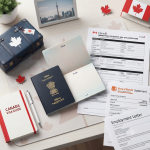
Typical documents include:
✔ Valid Passport
✔ Proof of course enrollment
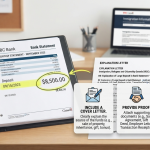
✔ Proof of financial means
✔ Accommodation proof
✔ Health coverage (NHS or insurance)
✔ Clean criminal certificate
✔ Biometric submission appointment
(Eligibility differs by individual case; always check the current checklist with AIMA.)
Application is submitted to AIMA (Agência para a Integração, Migrações e Asilo) — the Portuguese immigration authority that replaced SEF.
After submission, authorities review your file. Once approved, you receive a residence permit card allowing you to stay and study.
🔹 Residence permits under Article 92 are usually valid for 1 year and renewable if conditions are met.
🔹 Maintaining enrollment and legal status is crucial for extension.
To successfully apply under Article 92:
You must be in Portugal legally with a valid visa or authorized stay.
Only courses recognized by Portuguese educational and vocational authorities qualify.
You must prove sufficient funds to support yourself for the duration of the course.
You must show official accommodation proof for your stay.
You either need to be covered by Portugal’s national health system or have valid private insurance.
Applicants must submit a certificate from their home country and, sometimes, from other countries they have lived in.
Although Portugal doesn’t publish a formal list, many vocational fields are widely accepted:
✔ Hospitality & Tourism
✔ Culinary Arts
✔ Beauty & Hairdressing
✔ Technical & Mechanical Skills
✔ Business & Management Skills
✔ Interior Design & Decoration
✔ Accounting & Finance
✔ Healthcare Support Services
These fields are popular because they align with Portugal’s job market and vocational priorities.
In 2023, AIMA replaced SEF as Portugal’s immigration authority. All Article 92 applications are now processed by AIMA.
Incomplete applications are now often automatically rejected if key documents are missing.
Recent 2026 updates from educational community sources suggest age restrictions and work‑hours conditions may be more strictly reviewed — especially for vocational students under or over certain ages — though official law text hasn’t fully changed yet. (Always check AIMA’s current guidelines.)
Yes — in many cases international vocational students over age 23 can work full‑time during their course, as long as it doesn’t interfere with your studies.
Yes! Time spent with a valid Article 92 residence permit counts toward the 5‑year residency requirement for permanent residency or citizenship in Portugal.
Once you complete your training:
✔ You can change to a work permit (e.g., Article 122) if you find employment.
✔ Time spent on vocational permit still counts toward long‑term residency goals.
|
Document |
Required? |
|---|---|
|
Valid Passport |
✔ |
|
Visa/Legal Status |
✔ |
|
Enrollment Letter |
✔ |
|
Proof of Funds |
✔ |
|
Accommodation Proof |
✔ |
|
Health Insurance / NHS Proof |
✔ |
|
Criminal Record |
✔ |
|
Biometric Appointment |
✔ |
Always verify with AIMA before submission — requirements can change.
❌ Applying with unrecognized programs
❌ Weak proof of financial means
❌ Missing or invalid accommodation proof
❌ Failure to attend biometric appointments
❌ Not maintaining valid status continuously
❌ Exceeding permitted travel outside Portugal
Missing essentials now often leads to automatic rejection under stricter 2025–2026 rules.
✔ Affordable compared to university or investment visas.
✔ Builds practical, employable skills.
✔ Time counts toward long‑term residency.
✔ Work rights available in many cases.
✔ Can switch to job permit later.
❌ Application process can be slow.
❌ Requires strict compliance with document requirements.
❌ Some vocational programs may be expensive.
❌ Not all courses are recognized — careful selection is essential.
Tuition Fees: €1,000–€12,00 per year (varies by field and institute)
Health Insurance: €150–€600 per year
Living Expenses: €8,000–€12,000 per year (rent, food, transport)
Application Fees: Government fees (~€400)
Biometric Appointment Fees: Varies
Note: Portugal’s overall cost of living is generally lower than many Western European countries.
✔ Riya from India completed hotel management, worked part‑time, and now pursuing long‑term residency.
✔ Arjun from Bangalore studied IT, maintained funds, passed language tests, and plans citizenship.
These case examples demonstrate how strategic course choice and compliance help boost approval chances.
Always verify that your course is accepted for Article 92 by AIMA.
Maintain legal status throughout — even during renewals.
Start compiling police certificates, bank statements, health insurance well before application.
Skipping dates can delay or void your application.
Be able to prove genuine ability to support yourself during your stay.
No — you generally must be in Portugal legally to file under Article 92.
It varies widely but can take several weeks to months depending on backlog.
Yes — provided your legal stay and permit conditions are maintained.
No — but it counts toward the required 5 years residency for citizenship eligibility.
Yes — family reunification is possible once you hold a valid permit.
Need More assistance : Contact Us
The Portugal Article 92 Vocational Training Program remains one of the most accessible, practical and cost‑effective pathways for non‑EU nationals to live, train, work and build a future in Europe. In 2026, with updated immigration processes under AIMA and stricter application standards, preparation and compliance are more critical than ever.
By carefully choosing recognized courses, preparing thorough documentation, and understanding the legal framework, you can not only successfully obtain a residence permit but also set yourself on a long‑term path toward work opportunities, permanent residency, or even Portuguese citizenship.
September 18, 2026

September 16, 2026
September 14, 2026

September 11, 2026