
 0 minutes
Planning to visit Australia for the first time but worried because you have no previous international travel history? The good news is that having a blank passport does not automatically mean you cannot apply for an Australian Visitor visa.
For an Australia travel visa, the important issue is whether you can provide convincing evidence that you are a genuine temporary visitor, have enough money for the trip and have reasons to return to your home country. Australia’s Department of Home Affairs specifically asks applicants to outline their previous travel history if any, while also providing evidence of their travel plans, finances and reasons for returning home. Immigration and citizenship Website
This guide explains what first-time travellers should prepare and how to present their application clearly.
Yes. A person can apply for an Australian Visitor visa without having previous international travel experience.
The Australian Department of Home Affairs does not state that an applicant must have travelled internationally before applying for the Visitor visa (subclass 600). Instead, applicants need to demonstrate that they intend to visit Australia temporarily and satisfy the applicable visa requirements.
Travel history can therefore be useful supporting evidence when someone has previously travelled overseas and complied with visa conditions. However, if you are a first-time traveller, you should not attempt to manufacture or exaggerate travel history.
Instead, strengthen other parts of your application, particularly:
The Department’s own visitor-visa guidance asks applicants to outline previous travel history “if any”, which is important for first-time travellers.me Travellers Show?
A strong first-time application should tell a consistent story:
Who are you? Why are you visiting Australia? Who is paying for the trip? How will you afford it? What will you do there? Why will you return to India?
There is no single document that answers all these questions. Your application should contain evidence that works together.
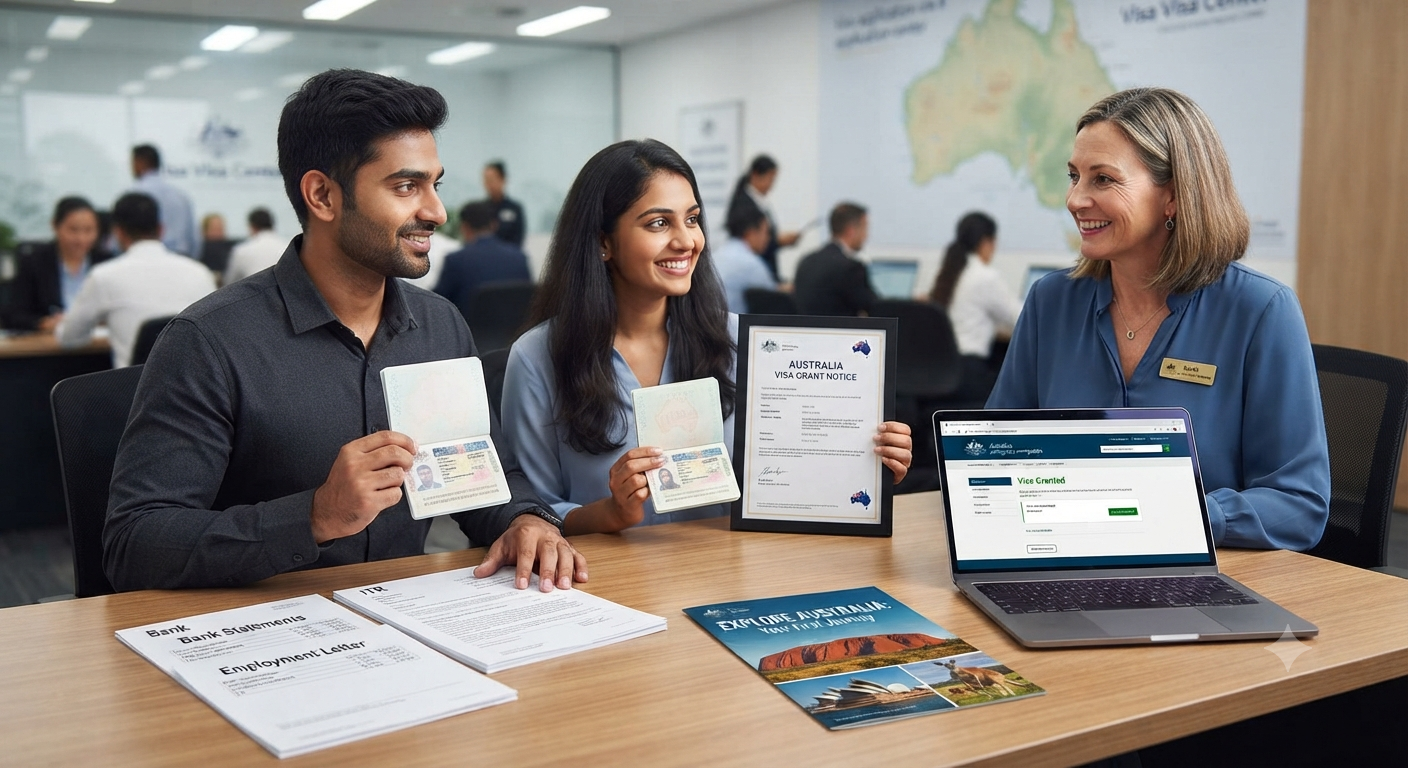
For example, an employed applicant could provide employment evidence, approved leave, salary records, bank statements and a realistic travel plan.
A business owner might instead provide business registration documents, tax records, business financial evidence and information demonstrating ongoing business responsibilities in India.
The exact documents required depend on your individual circumstances.
Start with a straightforward explanation of your trip.
If your purpose is tourism, explain:
Australia’s Department of Home Affairs recommends outlining your reason for travelling and your plans while in Australia. An itinerary can also be included.
Avoid creating an unnecessarily complicated itinerary. A realistic holiday plan is generally easier to understand than a schedule that attempts to cover too many places in a short period.
Financial evidence is one of the most important areas for a first-time traveller.
The Australian Department of Home Affairs states that applicants should have, or have access to, enough money to support themselves during their stay and leave Australia. Examples of financial evidence listed by the Department include personal bank statements, payslips, audited accounts, tax records, term deposits and credit-card statements. Immigration and citizenship Website
There is no universal bank-balance figure that automatically guarantees a Visitor visa.
Instead, your financial evidence should make sense in relation to:
For example, if someone normally earns ₹60,000 per month but suddenly deposits ₹15 lakh shortly before applying, that transaction may require a clear explanation and supporting evidence.
Do not borrow money temporarily simply to make your bank balance appear stronger.
If you have a legitimate large deposit, keep documents showing where the money came from.
For first-time travellers, employment and professional commitments can help demonstrate ties to India.
The Department specifically gives examples such as:
These documents can help explain your circumstances and your reasons for returning.
For a salaried employee, consider providing:
For a business owner, relevant evidence could include:
The objective is not to submit every document you have. It is to submit relevant evidence that clearly supports your circumstances.
This is particularly important when you have no travel history.
The Department of Home Affairs says applicants should show that they intend to return to their home country or usual country of residence. It identifies employment, family and study as examples of reasons to return.
Your circumstances might include:
Employment: You have an ongoing job and approved leave for a limited holiday.
Business: You operate a business that requires your return.
Education: You are enrolled in an educational programme in India.
Family: Your immediate family and responsibilities remain in India.
Assets: You own property or other significant assets.
Remember that having property or family in India does not automatically guarantee a visa. The purpose is to provide an accurate picture of your circumstances.
Don’t create artificial travel history.
If your passport has no previous visas or entry/exit stamps, simply disclose that you are a first-time international traveller.
A transparent explanation can be much better than trying to make your profile appear different from reality.
For example:
“This will be my first international holiday. I have not previously travelled outside India because of my work and family commitments. I am now planning a short holiday to Australia during my approved leave and intend to return to India to resume my employment.”
The wording should always reflect the applicant’s actual circumstances. Never copy an explanation simply because it sounds convincing.
Large deposits deserve special attention because the financial evidence should be understandable and credible.
Suppose you normally maintain a balance of ₹3 lakh but recently received ₹10 lakh from the sale of an asset.
Instead of simply showing the increased balance, provide evidence explaining the transaction, such as the relevant sale agreement, payment record or other legitimate supporting documentation.
Possible legitimate sources of funds may include:
The key principle is traceability.
If another person is funding your Australian trip, explain the relationship and provide appropriate evidence of the sponsor’s financial capacity. The Department specifically says that where an Australian relative or friend will pay for the visitor’s stay, evidence of that person’s funds should be provided.
A practical checklist can include the following, depending on your circumstances:
| Area | Examples of supporting evidence |
|---|---|
| Identity | Current passport and identity documents |
| Travel purpose | Cover letter, itinerary, accommodation information |
| Financial capacity | Bank statements, payslips, tax records |
| Employment | Employer letter, approved leave, payslips |
| Business | Registration, tax and business financial records |
| Study | Enrolment or educational documents |
| Family ties | Relevant evidence of immediate family |
| Assets | Property or other major asset evidence |
| Sponsorship | Sponsor letter and financial evidence where applicable |
| Travel history | Previous visas/stamps, if any |
| Translation | English translations of documents where required |
The Department advises applicants to submit clear documents and English translations for documents that are not in English. It also recommends submitting a complete, decision-ready application.
A first-time traveller should not invent previous trips or provide misleading information.
The Department specifically asks applicants to outline previous travel history if any.
A high balance by itself does not explain where the money came from.
If there is an unusual transaction, prepare supporting evidence that demonstrates its legitimate source.
A useful cover letter should explain your actual situation, not simply repeat generic visa statements.
It should connect your travel purpose, finances, employment or business, itinerary and return circumstances.
Visa processing times can vary. The Department advises applicants to use its processing-time guidance and apply well in advance of travel. Immigration and citizenship Website
Previous international travel can provide useful context, but it is only one part of the overall application.
A first-time traveller should focus on presenting accurate evidence of their current circumstances and temporary travel purpose.
As of October 2026, the Australian Department of Home Affairs continues to describe the Visitor visa (subclass 600) Tourist stream as a temporary visa for tourism, visiting family or friends and similar permitted purposes. Applicants applying from outside Australia must be outside Australia when the visa is granted, and they must have enough money for their stay and intend to visit temporarily. Immigration and citizenship Website
The current Department guidance also emphasises decision-ready applications. Applicants are encouraged to provide the required information and documents when submitting the application because incomplete applications can result in delays or decisions being made without additional information being requested. Processing times should always be checked immediately before applying because they change over time and can vary between individual applications. The Department’s processing-time tool is only a guide and is not a guarantee for a particular applicant.
Official source: Australian Department of Home Affairs — Visitor visa (subclass 600), Tourist stream
Before submitting an Australia travel visa application, ask yourself:
If the answer to these questions is yes, your application should present a much clearer picture of your circumstances.
If you are applying for an Australian Visitor visa for the first time, the most useful approach is to prepare your documents around your real circumstances, rather than trying to compensate for a blank passport with unnecessary paperwork. Bluebird Next can help you understand the documentation, cover-letter structure, itinerary and overall filing process. There is no guaranteed outcome, and every application is assessed on its own circumstances.
Explore Bluebird Next: Find more useful guides, downloads, travel resources and visa support. Visit Our Website
Can I apply for an Australia Visitor visa without travel history?
Yes. Previous international travel is not stated as a mandatory requirement for the Visitor visa. The Department asks applicants to provide previous travel history if any and also considers evidence relating to the purpose of travel, finances and intention to return.
How much bank balance is required for an Australia Visitor visa?
There is no single publicly stated bank-balance amount that guarantees eligibility. Applicants must demonstrate access to enough money to support themselves during their stay and leave Australia. The Department lists bank statements, payslips, tax records and other financial evidence as examples.
What should I do if I have a large recent bank deposit?
Explain the legitimate source of the deposit and provide supporting evidence where appropriate. For example, if the money came from an asset sale, maintain documents showing the transaction and payment. The financial evidence should be consistent with your declared circumstances.
Does having a job in India help a first-time traveller?
Employment can be relevant evidence of your circumstances and your reasons to return. The Department specifically lists an employer letter, current payslip and evidence of approved leave among examples of documents that can support an applicant’s intention to return home.
Should I book flights before getting my Australia Visitor visa?
Applicants should consider visa processing times and their individual circumstances before making non-refundable travel commitments. The Department recommends applying well in advance and checking its current processing-time guidance, which is only an indication and can change.
Applying for an austrelia travel visa without previous international travel is possible, but first-time travellers should focus on presenting a clear, truthful and well-supported application.
A blank passport does not tell the whole story. Your purpose of travel, financial capacity, employment or business situation, family or other commitments in India, itinerary and intention to return can provide important context. The Australian Department of Home Affairs specifically asks applicants to explain previous travel history if any, rather than making previous travel a universal requirement.
Before submitting your application, review every document for consistency and explain any unusual financial transactions clearly. For current requirements, always check the official Australian Department of Home Affairs guidance because visa rules and processing information can change.
For additional document guidance and visa-filing resources, visit Bluebird Next at bluebirdnext.com or consider booking a free call to discuss your situation.

October 16, 2026
October 12, 2026

October 10, 2026

October 8, 2026
October 3, 2026