 0 minutes
Introduction
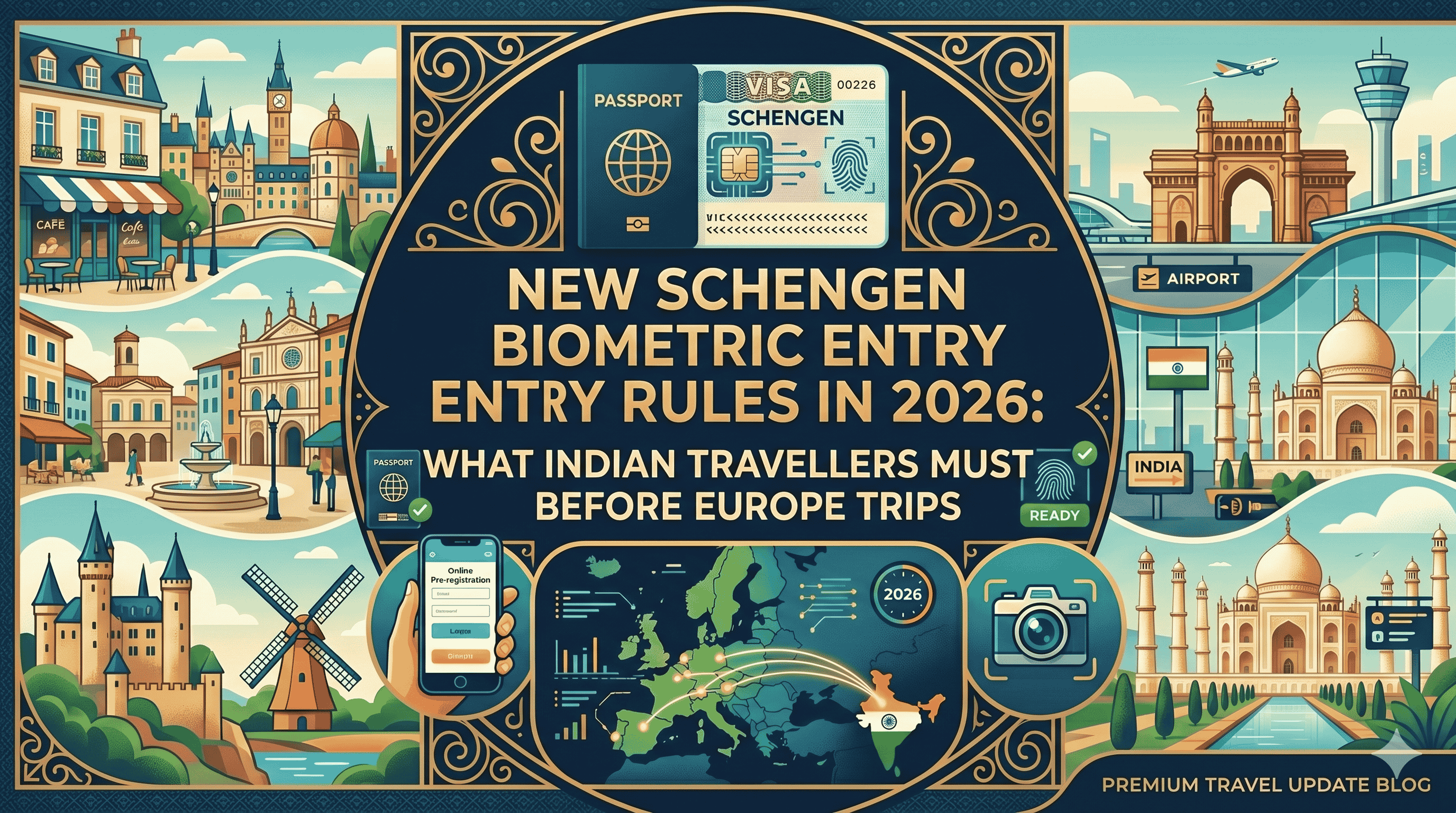
Europe has entered a new chapter of border management in 2026, one defined by digital identification, biometric verification, and tighter compliance checks across all 29 Schengen countries. For Indian travellers planning trips to France, Germany, Italy, Switzerland, the Netherlands, Spain, and other European destinations, the transition is more than a procedural update. It represents a fundamental shift in how passports, identities, and travel histories are recorded at European borders. With the Entry Exit System now fully operational since 10 April 2026, the way Indians Apply For Schengen Tourist Visa approvals and clear immigration on arrival has changed permanently. Understanding these reforms is essential for any Indian planning a Europe journey this year, and Bluebird Next has built its 2026 advisory framework around exactly these new realities.
Understanding the New Schengen Biometric Entry Rules in 2026
The Entry Exit System, commonly referred to as EES, replaces traditional passport stamping with an automated digital record. Every traveller from outside the European Union crossing an external Schengen border now has their fingerprints, facial image, and travel document information recorded electronically. The data is stored centrally for up to three years for travellers entering legally and longer in cases involving refusals. For Indian passport holders applying for a Schengen Travel Visa, this means biometric details captured at the visa application centre and at the border together form a continuous digital footprint. Border agencies can now instantly verify how many of the permitted 90 days within a 180 day window a traveller has used, eliminating the ambiguity that earlier surrounded manual passport stamps.
Why the New Rules Matter for Indian Travellers
For Indian travellers, the shift carries clear practical implications. First time visitors to Europe will need to enrol biometric data at the border on their first arrival, while repeat travellers whose biometrics are already on file may pass through automated kiosks more quickly. The system also tightens scrutiny of overstays, with European border authorities reporting that thousands of visitors were flagged within the initial rollout months. Indian families, students, professionals, and first time tourists who Apply For Tourist Schengen Visa approvals must now plan with greater precision, ensuring that arrival dates, departure dates, and onward bookings align with the digital records held by European border authorities. Inconsistencies between the visa file and the actual travel pattern are now far easier to detect than ever before.
How Schengen Travel Visa Procedures Are Changing
While EES operates at the border, the visa process itself is also being modernised. A unified digital application portal is being piloted in several member states, and the European Union has indicated that fully digital visa issuance will be operational across the bloc over the next two to three years. For Indian applicants, the immediate change is a greater emphasis on data accuracy. Names, passport numbers, biometric records, and travel histories must match precisely across every document submitted. Bluebird Next has observed that even minor discrepancies, such as differences between a passport name and a hotel booking, can cause delays. Applicants who Apply For Schengen Tourist Visa clearance through experienced consultants are better positioned to avoid these pitfalls and present a cohesive, verifiable file to the consular officer.
Updated Schengen Visa Processing Time Expectations in 2026
Although the official guideline remains fifteen calendar days from the date of application submission, real world experience tells a different story. The current Schengen Visa Processing Time for Indian applicants can stretch to four or even six weeks during peak travel months, particularly between April and August and again during the December festive period. Appointment slots at VFS centres in Delhi, Mumbai, Bengaluru, Chennai, Hyderabad, and other major cities tend to fill weeks in advance. Bluebird Next strongly advises Indian travellers to begin the application process at least six to eight weeks before the planned departure date. Booking biometric appointments early, submitting financial documents in the prescribed format, and ensuring travel insurance coverage of at least thirty thousand euros are now non negotiable elements of a successful Europe visa file.
Essential Visa Application Checklist for Europe Travel
Documentation remains the foundation of every Schengen approval. A complete Visa Application Checklist for Indian applicants includes a passport valid for at least three months beyond the intended departure, two recent photographs that meet ICAO specifications, a completed visa application form, proof of accommodation, confirmed return flight bookings, comprehensive travel insurance, recent bank statements typically covering the last six months, income tax returns, and an employment or business letter confirming the applicant’s ties to India. Missing any one of these items frequently leads to delays or refusals, which is precisely why Bluebird Next prepares a tailored document file for every applicant before submission, reducing the risk of incomplete files reaching the embassy.
Importance of an Accurate Travel Itinerary for Schengen Approval
A precise Travel Itinerary has become one of the most scrutinised elements of a Schengen file. Consular officers in 2026 are looking for itineraries that demonstrate logical travel routing, realistic daily plans, and matching accommodation reservations. A weekend in Paris followed by three days in Rome and a return flight from Amsterdam, for example, should be backed by confirmed hotel bookings, internal flight or train tickets, and clearly stated arrival and departure dates that align with the visa application. Bluebird Next assists travellers in building credible day by day plans that reflect both the purpose of the trip and the financial profile declared in the application, presenting the journey as a serious, well researched undertaking rather than an ambiguous outline.
Understanding Sample Visa Application Documents
Reviewing Sample Visa Application Documents is one of the most effective ways for first time travellers to grasp what consular officers actually expect. These typically include sample bank statements with consistent monthly inflows, sample employment letters specifying designation and approved leave dates, sample income tax returns, sample accommodation confirmations, sample travel insurance certificates meeting the thirty thousand euro threshold, and sample sponsorship letters where applicable. Through its resource library, Bluebird Next offers professionally drafted reference samples that Indian travellers can adapt to their own circumstances. Detailed walkthroughs of such samples can be accessed via Bluebird Next, where applicants find practical guidance on financial proofs, employer letters, and other supporting paperwork.
How to Write a Strong Cover Letter For Visa Application
A well crafted Cover Letter For Visa Application often determines whether a borderline case is approved or refused. The letter should be addressed to the appropriate consulate, state the purpose of travel, mention the exact dates of entry and exit, list every Schengen country to be visited, declare the source of funds, and reaffirm the applicant’s intention to return to India at the end of the trip. It should also briefly outline professional or family ties that anchor the applicant in India. The tone should be formal yet personal, avoiding generic templates that consular officers easily recognise. Bluebird Next provides editable letter formats that combine professional language with the specific personal details required by individual embassies across France, Germany, Switzerland, the Netherlands, and other Schengen countries.
Step by Step Guidance to Apply For a Schengen Tourist Visa
The process to Apply For Schengen Tourist Visa clearance from India in 2026 begins with identifying the country of main destination based on the longest planned stay. The next step involves filling the online application form on the relevant consulate or VFS Global portal, paying the visa fee of approximately ninety euros, and booking a biometric appointment at the nearest VFS centre. Applicants then attend the appointment in person, submit physical documents, and provide fingerprints and a photograph. After submission, the file is forwarded to the consulate for review, and once a decision is issued, the passport is returned by courier or collected in person. Bluebird Next supports clients through every stage, ensuring that documentation, appointment scheduling, and post submission tracking proceed without avoidable obstacles.
Common Mistakes Travellers Make When They Apply For a Tourist Schengen Visa
Even seasoned travellers make recurring errors when they Apply For Tourist Schengen Visa approvals. The most frequent missteps include applying to the wrong embassy, submitting bank statements with unexplained large deposits, providing an itinerary inconsistent with hotel bookings, omitting travel insurance that meets European minimum coverage, and using cover letters copied from generic online templates. Others overlook the new biometric compliance requirements, arriving at the border without understanding that fingerprints and facial data will be captured automatically. Bluebird Next advises travellers to address every requirement systematically, rather than relying on assumptions carried over from earlier years when Schengen procedures were comparatively more flexible.
How Bluebird Next Supports Indian Travellers
Bluebird Next has earned its reputation as a trusted visa consultancy by guiding Indian travellers through every layer of the Schengen application process. The team brings deep Europe travel expertise, offering personalised travel support, documentation assistance, application preparation, and post submission follow up. From assessing eligibility and drafting tailored cover letters to building a credible Travel Itinerary and reviewing financial documents, the consultancy provides an integrated framework for applicants of every profile. Whether the traveller is a student exploring Europe for the first time, a family planning a multi country holiday, or a professional attending a business conference, Bluebird Next adapts its approach to match individual goals. More details on services, downloadable templates, and country specific resources are available at Bluebird Next.
The Future of Europe Travel After Biometric Integration
The introduction of EES is only the first step in a wider digital transformation of European borders. Later in 2026, the European Travel Information and Authorisation System, known as ETIAS, will go live for visa exempt nationalities, while the broader Schengen visa system continues its phased move toward fully digital issuance. For Indian travellers, this trajectory points to faster border processing for compliant repeat visitors, deeper verification of travel histories, and a sharper focus on document accuracy at every stage. Those who Apply For Schengen Tourist Visa approvals through informed channels will find the new ecosystem more predictable, while less prepared applicants may face longer waits and tougher questioning. Europe is not closing its doors to Indian visitors. It is simply raising the standard of preparation expected from them.
Conclusion
The 2026 reforms mark a turning point in Schengen travel for Indian passport holders. Biometric verification, the Entry Exit System, evolving processing timelines, and stricter document checks together reward those who plan early and apply through experienced advisors. With its consistent track record, sector specific expertise, and deep familiarity with embassy expectations, Bluebird Next continues to stand as a reliable partner for Indian travellers preparing for Europe in 2026. Travellers are encouraged to begin preparation well in advance, work through a thorough Visa Application Checklist, gather authentic supporting documents, and consult professionals for itinerary design, cover letter drafting, and biometric appointment scheduling. To begin a confident, well prepared Europe journey, visit Bluebird Next engage with consultancy team for personalised guidance tailored to your travel plans.