 0 minutes
Receiving a UK visa refusal is a moment of pure frustration. You’ve spent weeks preparing documents, thousands of pounds in fees, and months of nervous waiting—only to be told “No” by a Home Office caseworker.
When you start researching how to fight back, one term appears almost immediately: the Pre-Action Protocol Letter (or PAP Letter).
But what is a pre-action protocol letter exactly? Is it just a formal complaint? Is it a legal threat? Or is it a magic key that can unlock a reversed decision?
In this comprehensive guide, we are going to deep-dive into the anatomy of the PAP letter, explaining why it is the most vital document in your immigration arsenal and how it serves as the final bridge between a visa refusal and a successful outcome.
Read Also: UK Pre-Action Protocol Explained: A Complete Guide for Visa Applicants (2026)
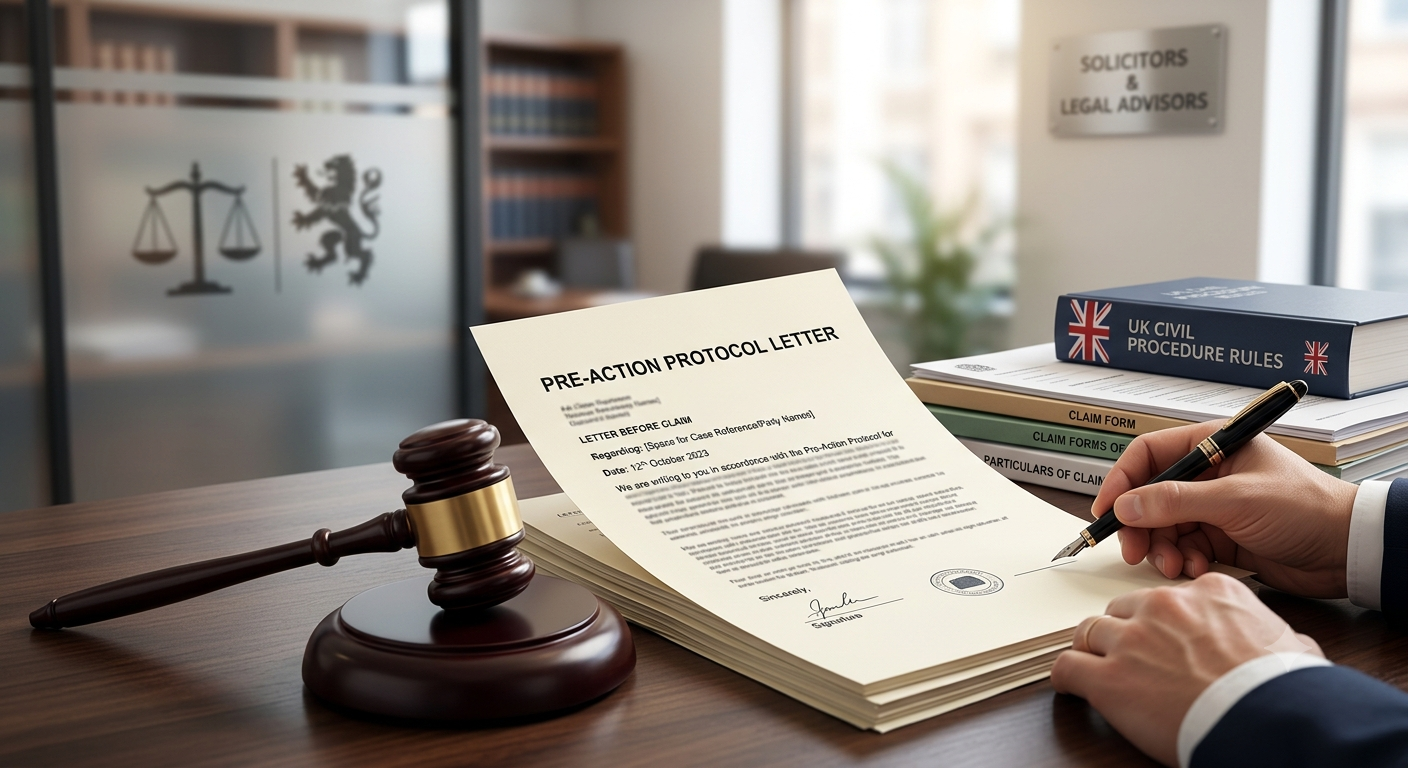
At its most basic level, a Pre-Action Protocol (PAP) Letter—formally known as a Letter Before Claim—is a legal notice sent to the UK Home Office. It notifies them that you intend to apply for a Judicial Review in the High Court or Upper Tribunal because you believe their decision was unlawful, irrational, or procedurally unfair.
However, it is much more than a “warning shot.” Under the Civil Procedure Rules (CPR), the PAP letter is a mandatory requirement. It is designed to give the Home Office one last chance to fix a mistake without the need for an expensive and time-consuming court battle.
Think of it this way: The PAP letter is a formal, legally structured argument that says, “You made an error. Here is exactly where you went wrong. Here is the law you ignored. If you don’t fix this in 14 days, a judge will see it.”
The UK legal system does not want every visa dispute to end up in court. The courts are busy, and litigation is expensive for both the taxpayer and the applicant. The PAP letter was created to achieve three main goals:
You need a PAP letter when the Home Office has made a decision that cannot be challenged through a standard appeal, or when an Administrative Review has already failed.
Common scenarios include:
Many applicants wonder if they can just send a “nice email” or call the Home Office to explain the mistake. The answer is no.
Here is why the formal PAP letter is superior:
Standard applications are handled by caseworkers. A Pre-Action Protocol letter is typically sent to the Litigation Operations team. These are specialized staff members who work closely with government lawyers. They look at your case through a legal lens: “If this goes to court, will we lose?” If the answer is yes, they will likely overturn the decision.
In the UK, you generally only have 3 months from the date of a refusal to file for Judicial Review. Sending a PAP letter shows the court that you acted promptly and tried to resolve the issue fairly before taking up court time.
While the Home Office does not publish exact “concession rates” for PAPs, immigration experts widely agree that a high-quality, legally grounded PAP letter is one of the most effective ways to get a visa granted after a refusal.
A full Judicial Review can cost thousands of pounds. A PAP letter, while requiring professional legal drafting, is a fraction of that cost. It is the most “bang for your buck” legal move in UK immigration.
A PAP letter is not a letter of complaint; it is a legal pleading. To be effective, it must follow the Annex A format of the Judicial Review Protocol.
Here is what must be included:
You must include your Home Office reference number, GWF number, case ID, and your full name/date of birth. If the Home Office cannot find your file, they cannot respond.
Specifically state which decision you are challenging (e.g., “The decision dated 15th June 2026 to refuse a Skilled Worker Visa”).
A concise summary of your application. What did you apply for? What evidence did you provide? What did the Home Office say in their refusal?
This is where you explain the “Why.” You must cite specific sections of the Immigration Rules or UK law.
What do you want? Usually, it is: “We request that you withdraw the refusal dated [Date] and grant the visa within 14 days.”
The standard timeframe is 14 days. In extreme emergencies (e.g., an imminent deportation or a dying relative), you can request a shorter timeframe, but you must justify it.
Sending a poorly written PAP letter can be worse than sending none at all. Common pitfalls include:
Once your PAP letter is sent, the Home Office has a 14-day “holding period.” There are three possible outcomes:
Not every refusal can be fixed with a PAP letter. If you truly didn’t meet the requirements (e.g., you actually didn’t have the money in your account), a PAP letter won’t help.
However, if you feel the caseworker missed something, misunderstood the law, or acted unfairly, the PAP letter is your strongest tool.
The difference between a “complaint” and a “Pre-Action Protocol Letter” is legal expertise. At Bluebird Next, we specialize in identifying the specific legal errors caseworkers make.
We don’t just ask the Home Office to change their mind; we prove they are legally required to.
Our Process:
Don’t accept a “No” that shouldn’t have been given.
Contact Bluebird Next Today
Book a Free Case Assessment
Email: info@bluebirdnext.com
Q: Can I write the PAP letter myself?
A: Technically, yes. However, it is a legal document. If you don’t cite the correct laws or follow the mandatory format, the Home Office is likely to dismiss it.
Q: How much does a PAP letter cost?
A: The cost varies depending on the complexity of the case, but it is significantly cheaper than a Judicial Review or starting a new visa application from scratch.
Q: Does sending a PAP letter affect my future visa applications?
A: No. Exercising your legal right to challenge a decision is not seen as a negative factor in future applications. In fact, if you win, it clears your record of a refusal.
Q: What is the success rate of a PAP letter?
A: For cases with clear caseworker errors (like financial or document mistakes), the success rate is very high. It is the single most effective “pre-court” remedy available.