 0 minutes
You’ve worked hard on your UK visa application. You’ve gathered every document, paid every fee, and waited months—only to receive a refusal letter from the Home Office.
It feels like a dead end. But it doesn’t have to be.
Before rushing to court, before panicking, and before giving up on your UK dreams entirely, there is a powerful and often overlooked legal tool available to you. It’s called the UK Pre-Action Protocol (PAP), and understanding it could be one of the most important steps you take after a visa refusal.
In this guide, we’ll explain exactly what the UK Pre-Action Protocol is, how it works in visa and immigration cases, and what steps you need to take to use it effectively.
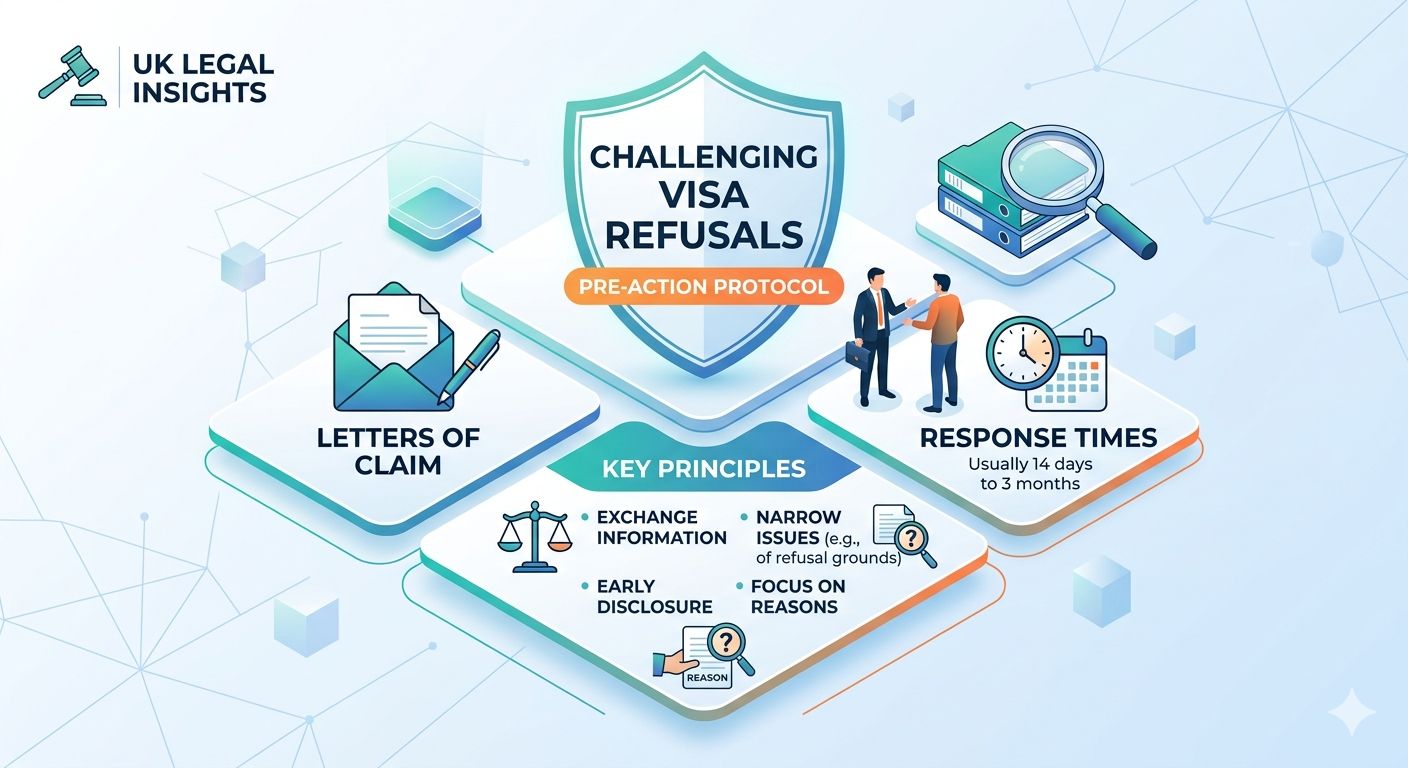
The UK Pre-Action Protocol (PAP) is a formal legal process established under the Civil Procedure Rules (CPR). It sets out the steps that should be followed before starting legal proceedings, such as a Judicial Review, against a public authority like the UK Home Office.
In simple terms, it is a formal opportunity for you and the Home Office to resolve a dispute before the matter reaches court.
The main objectives of the Pre-Action Protocol are to:
The Pre-Action Protocol is much more than a procedural formality. Courts expect both parties to comply with it, and failure to do so may have legal consequences.
Also Read: How to write UK Visa Cover Letter
For UK immigration matters, the PAP is commonly used under the Pre-Action Protocol for Judicial Review, which applies when a public body has made an unlawful or unreasonable decision.
Using the PAP offers several important benefits.
If the Home Office:
you can formally ask it to reconsider its decision before going to court.
Many immigration decisions are reconsidered after receiving a strong PAP letter. This means you may avoid expensive court proceedings altogether.
If Judicial Review later becomes necessary, following the PAP shows the court that you attempted to resolve the dispute fairly before commencing legal action.
The Home Office is expected to respond properly to your PAP letter. A failure to respond or an inadequate response may be considered by the court if Judicial Review is later pursued.
The PAP may be appropriate in several immigration situations, including:
The PAP is not a substitute for a statutory appeal.
If your refusal carries a right of appeal before the First-tier Tribunal (Immigration and Asylum Chamber), that appeal route should usually be used instead.
Judicial Review—and therefore the PAP—is generally appropriate only where there is no adequate alternative legal remedy.
The process usually follows four main stages.
The first step is carefully reviewing the refusal decision to identify legal errors.
Possible grounds include:
A strong legal basis is essential before proceeding.
The Letter Before Claim, often called the PAP Letter, is the most important document in the process.
It should clearly include:
For immigration Judicial Review matters, the Home Office is generally expected to respond within 14 days.
A professionally drafted PAP letter significantly increases the chances of obtaining a positive response. Weak or emotional letters are far less effective than legally structured submissions.
Once the PAP letter is received, the Home Office normally has 14 days to respond.
Its response may:
Many successful immigration cases are resolved during this stage without court proceedings.
After receiving the Home Office response, you may choose to:
|
Stage |
Typical Time |
|---|---|
|
Preparing the PAP Letter |
1–2 weeks |
|
Home Office Response |
14 days |
|
Reviewing the Response |
Around 1 week |
|
Judicial Review Deadline |
Within 3 months of the original decision |
The three-month Judicial Review time limit starts from the date of the original Home Office decision, not from the date you send the PAP letter.
Delaying the PAP process could reduce the time available to file Judicial Review proceedings.
Many applicants unintentionally weaken their cases by making avoidable mistakes.
Common errors include:
Avoiding these mistakes can significantly improve your chances of success.
Yes.
The Home Office processes millions of immigration applications every year, and mistakes can happen.
Caseworkers may:
A well-prepared PAP letter clearly identifying these legal errors often prompts an internal review.
Although success cannot be guaranteed, many immigration disputes are successfully resolved before reaching court.
At Bluebird Next, we understand how stressful a UK visa refusal can be.
Our experienced immigration consultants work alongside qualified legal professionals to help clients by:
If you’ve received a UK visa refusal or are experiencing unreasonable delays, don’t wait. The Judicial Review deadline continues to run while you prepare your case.
Let our team review your case and provide an honest assessment of whether a Pre-Action Protocol challenge is appropriate.
Bluebird Next
Book a Call: Click Here
Email: info@bluebirdnext.com
This article is provided for general informational purposes only and does not constitute legal advice. UK immigration law is complex and depends on the individual facts of each case. Always seek advice from a qualified immigration solicitor or regulated immigration adviser before taking legal action.