
 0 minutes
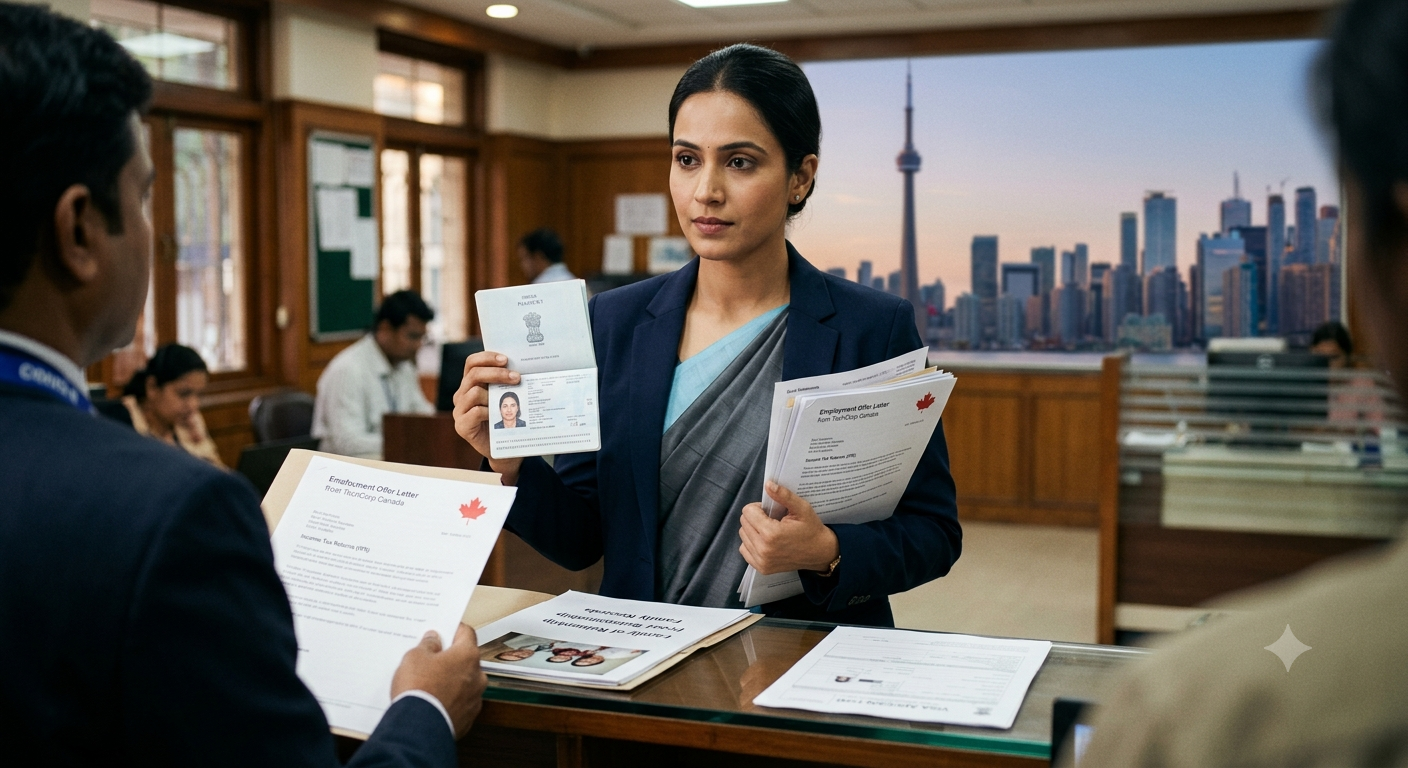
Applying for a Canada visitor visa from India is not only about showing money in your bank account. You also need to demonstrate that your visit is temporary and that you have genuine reasons to return to India after your trip. Employment, business, property, financial responsibilities and family relationships in India can help establish these ties.
IRCC states that a visitor visa applicant must convince an immigration officer that they have ties such as a job, home, financial assets or family that will take them back to their country of residence. Applicants must also demonstrate that they will leave Canada at the end of their authorized stay and have enough money for the visit. IRCC – Visitor Visa Eligibility
This guide explains how Indian applicants can document employment and family ties clearly and consistently.
For a visitor visa application, ties to India are circumstances that support your explanation that you have reasons to return after your temporary visit.
These can include:
There is no single document that automatically proves strong ties. Instead, your application should present a consistent overall picture.
IRCC specifically lists employment contracts, pay stubs and employer reference letters among examples of documents that can demonstrate employment or work experience.
A Canada visitor visa is for temporary visits. Therefore, the visa officer needs to assess whether your circumstances are consistent with the purpose and duration of your proposed trip.
For example, an applicant who says they are travelling to Canada for a 15-day holiday but provides employment documents showing an extended unexplained absence may create questions.
Similarly, an applicant may have family members in Canada but also have a spouse, children, business or employment responsibilities in India. These circumstances should be explained accurately rather than simply listing documents.
The objective is not to create artificial ties. It is to document genuine circumstances that already exist.
IRCC’s visitor visa requirements specifically require applicants to convince an officer that they will leave Canada at the end of their visit.
If you are employed, request an official employment letter from your employer.
Where applicable, the letter should clearly establish:
IRCC identifies employment contracts, pay stubs and employer reference letters as examples of supporting evidence for employment or work experience.
Important: The information in your employment letter should be consistent with your application forms, bank transactions and other supporting documents.
An employment letter is stronger when supported by evidence showing that the employment is genuine and ongoing.
Depending on your circumstances, you may include:
The purpose is to show a logical connection between your employment, income and financial activity.
For example, if your employment letter states a monthly salary of ₹80,000 but your bank statement does not show regular salary credits, you should be prepared to explain the difference.
If your employer has approved leave for your Canada trip, documentation of that leave can help connect your proposed travel dates with your employment responsibilities.
For example:
“The applicant has been granted leave from 10 November to 24 November and is expected to resume duties on 25 November.”
This can provide context for why your proposed trip is limited to a specific period.
Do not create or alter an employer letter simply to strengthen a visa application. All information should be genuine and verifiable.
Business owners and self-employed applicants should document the business and their continuing responsibilities in India.
Potential evidence can include:
The important point is to demonstrate that the business is real, active and connected to your ongoing responsibilities in India.
A business owner should also explain who will manage the business during the proposed Canada trip.
For example, if you own a business and plan to travel for two weeks, your cover letter could explain the temporary nature of the trip and how business operations will continue during your absence.
Family relationships can be relevant to a temporary resident application, but they should be documented rather than simply mentioned.
Depending on your circumstances, useful documents may include:
These documents can help establish the relationship between you and family members who remain in India.
However, having family in India does not guarantee visa approval. The officer considers the complete application and individual circumstances.
IRCC also requires applicants in certain circumstances to provide evidence of relationships, such as marriage certificates or birth certificates, particularly when demonstrating relationships with people involved in the visit.
This is an important situation.
Suppose a husband, wife and child are travelling to Canada together for a holiday. You should not claim that the spouse and child remaining in India are your ties because they are travelling with you.
Instead, document the genuine ties that actually remain in India, such as:
The application should accurately describe who is travelling, who is staying in India and why the trip is temporary.
One of the most important parts of a Canada visitor visa application is consistency.
Consider this example:
An applicant earns ₹1,00,000 per month, receives salary into their bank account, has approved leave for 15 days, has a spouse and children in India, and plans a 12-day holiday in Canada.
The supporting documents should tell the same story:
| Area | Supporting Evidence |
|---|---|
| Employment | Employment letter and contract |
| Income | Salary slips and bank credits |
| Leave | Employer-approved leave |
| Family | Marriage and children’s documents |
| Trip | Travel itinerary and accommodation details |
| Funds | Bank statements and income evidence |
| Purpose | Clear explanation of the temporary visit |
This does not mean every applicant needs every document listed above. Your document checklist depends on your individual circumstances.
A cover letter should not simply say:
“I have strong family ties in India.”
Instead, explain the actual circumstances.
For example:
Weak approach:
“I have family ties in India, so I will return.”
Better approach:
“I am employed as [job title] with [company] in India and have been granted leave from [date] to [date] for my proposed holiday. My spouse and children reside in India, and I will resume my employment after returning from Canada.”
The second version provides factual context instead of making a general statement.
Never exaggerate family responsibilities or claim dependency that does not exist.
IRCC’s current visitor visa guidance continues to emphasise three important areas: ties to the applicant’s home country, intention to leave Canada at the end of the visit, and sufficient funds for the stay. The amount of money required is not presented as one universal fixed amount; it can vary depending on factors such as the length of the visit and whether you stay in a hotel or with friends or relatives.
IRCC’s supporting-document guidance also confirms that proof of employment can include employment contracts, pay stubs and employer reference letters.
Because immigration requirements and document checklists can change, applicants should always check the current IRCC instructions and personalised document checklist before submitting an application.
For the official application process, see IRCC – How to Apply for a Visitor Visa.
Before submitting your application, review the following:
Imagine an Indian applicant working for a private company for four years.
The applicant plans a two-week vacation to Canada and has approved leave from work. Their salary is credited regularly into their bank account. Their spouse and child live in India, and the child attends school in India.
A logical application could connect these facts through:
The strength of the application comes from consistency and credible evidence, not from simply submitting a large number of documents.
Preparing a Canada visitor visa application can be easier when your documents, financial information, employment evidence and travel purpose are organised before submission. Bluebird Next provides visa resources designed to help applicants understand the documentation and filing process. You can download useful templates and checklists, learn the filing process, explore additional visa guides, or speak with the team about your questions. Always verify the latest requirements with IRCC before submitting your application.
Employment can be an important part of demonstrating ties to India. Useful evidence may include an employment letter, contract, pay slips and other relevant records. IRCC specifically identifies employment contracts, pay stubs and employer reference letters as examples of proof of employment or work experience.
You can document genuine family relationships using relevant records such as marriage certificates, children’s birth certificates and other documents applicable to your circumstances. Family ties are only one part of the overall assessment, so they should be presented consistently with your employment, finances and travel purpose.
No single property document is stated as a universal requirement for every visitor visa applicant. IRCC refers more broadly to ties such as a job, home, financial assets or family. If you own property and it is relevant to your circumstances, you can provide appropriate supporting evidence.
There is no single universal bank-balance figure stated for all Canada visitor visa applicants. IRCC says the amount of money needed depends on factors including the length of the visit and whether you stay in a hotel or with friends or relatives. Your funds should be consistent with your proposed trip and circumstances.
If your immediate family is travelling with you, do not present them as family members remaining in India. Instead, provide genuine evidence of other relevant ties and explain the temporary nature of the trip. Your employment, business, property, financial responsibilities or other circumstances may be relevant depending on your individual situation.
For a Canada visitors visa from India, proving employment and family ties is about demonstrating your genuine circumstances clearly and consistently. An employment letter, salary evidence, approved leave, family documents, financial records and a logical travel plan can work together to explain why your trip is temporary.
There is no single document that guarantees approval, and applicants should avoid fabricated or exaggerated evidence. Focus on accurate documents, consistency and a clear explanation of your personal circumstances.
Before applying, check the latest requirements directly with IRCC and review your documents carefully. For additional visa resources, templates and filing guidance, visit Bluebird Next at https://bluebirdnext.com/ or contact the team for assistance with your questions.
September 21, 2026
September 18, 2026

September 16, 2026

September 14, 2026

September 11, 2026