
 0 minutes
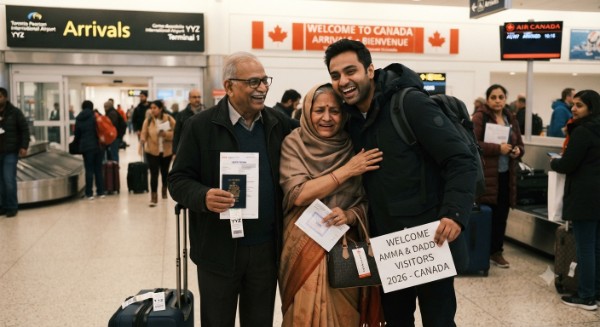
If parents want to visit their children in Canada in 2026, the Canada visitor visa process requires more than simply showing an invitation from a son or daughter. Applicants need to demonstrate the genuine purpose of their visit, sufficient financial support, strong circumstances in their home country, and their intention to leave Canada at the end of their authorised stay.
For parents travelling from India, the application should clearly explain the family relationship, reason for travel, planned duration, accommodation, finances and ties to India. This Canada visitors visa guide explains the key documents, application process, invitation letter, financial evidence, common mistakes and the difference between a regular visitor visa and the Super Visa.
Parents who want to visit their children in Canada may apply for a Temporary Resident Visa (TRV), commonly called a visitor visa, if they require a visa to enter Canada.
IRCC assesses whether the applicant meets the requirements for a temporary visit. Among other things, applicants must convince the immigration officer that they have sufficient funds, appropriate ties to their home country and that they will leave Canada at the end of their visit.
There is no single fixed bank balance that guarantees a Canada visitor visa. The amount of money required depends on factors such as the length of the trip, accommodation arrangements and the applicant’s overall financial circumstances.
If the parents intend to stay with their children, the child’s invitation letter can explain the accommodation and who will pay for travel and living expenses.
A parent visiting a son or daughter in Canada has a genuine and understandable reason for travelling. However, the existence of family in Canada can also make it important to clearly demonstrate that the visit is temporary.
A well-prepared application should tell one consistent story:
The invitation letter is supporting evidence; it does not itself guarantee visa approval. IRCC states that visa officers assess the applicant against Canada’s immigration requirements.
One of the most important decisions is choosing the appropriate temporary-entry option.
A regular visitor visa can be suitable when parents want to visit their children for a shorter period. If the intended stay is 6 months or less, IRCC specifically directs applicants toward a visitor visa rather than a Super Visa.
The application generally focuses on the temporary purpose of the trip, financial circumstances, family relationship, travel plans and the applicant’s intention to leave Canada.
The Super Visa is specifically designed for parents and grandparents of Canadian citizens, permanent residents or registered Indians.
According to IRCC, eligible Super Visa holders can visit their children or grandchildren in Canada for up to 5 years at a time, and the visa can provide multiple entries for a period of up to 10 years.
The Super Visa has additional requirements, including an eligible host in Canada, financial-support requirements, an immigration medical examination and qualifying private health insurance.
Therefore, parents should not automatically choose a Super Visa simply because their child lives in Canada. The appropriate application depends on the family’s circumstances and intended length of stay.
Start by explaining why the parents want to visit Canada.
For example, the purpose could be:
The explanation should be genuine and consistent with the supporting documents.
If the parents plan to stay for a specific period, state the approximate dates and explain why those dates make sense.
An invitation letter from the child in Canada can help explain the purpose of the visit and the family relationship.
IRCC recommends including information about both the visitor and the person inviting them.
The invitation should generally explain:
The person in Canada should also provide relevant information about themselves, including their address, employment and Canadian immigration status.
Proof of status can include documents such as a Canadian citizenship document or PR card, depending on the person’s circumstances.
Important: An invitation letter does not guarantee that a visitor visa will be approved.
The relationship between the applicant and the Canadian host should be supported with appropriate documents.
Depending on the circumstances, this may include:
The documents should tell a consistent story about the family relationship.
If names have changed because of marriage or other circumstances, additional documentation may be useful to connect the names across different documents.
Financial documents are an important part of a visitor visa application.
IRCC’s visitor visa guidance indicates that applicants need enough money for their stay, with the amount depending on factors such as the length of the visit and whether they will stay in a hotel or with relatives.
Depending on the applicant’s circumstances, supporting evidence may include:
The key is not simply showing a large balance. The financial evidence should make sense in relation to the applicant’s income, assets, travel plans and normal financial activity.
A sudden large deposit can raise questions if its source is not clear.
For example, if a parent normally maintains a modest bank balance but suddenly receives a large amount shortly before applying, the application should clearly explain the legitimate source of the funds.
Depending on the circumstances, supporting evidence could include:
Do not deposit borrowed or unexplained money simply to create a stronger-looking bank balance. Financial documents should accurately represent the applicant’s real circumstances.
For parents applying from India, ties to India can be an important part of the overall temporary-visit assessment.
IRCC states that visitor visa applicants must convince an immigration officer that they have ties—such as a job, home, financial assets or family—that will take them back to their home country.
Depending on the applicant, relevant evidence may include:
Not every parent will have employment, especially retired parents. That does not mean they cannot apply. Instead, the application should accurately explain their circumstances and provide relevant evidence of their connections and responsibilities.
Parents do not necessarily have to pay for the entire visit themselves.
A child in Canada may provide financial support for the visit. However, the application should clearly explain the arrangement.
For example:
Parent pays: The parent provides evidence of sufficient personal funds and pays for flights and daily expenses.
Child pays: The child provides evidence explaining their ability to support the parent and confirms accommodation and other expenses.
Shared expenses: The application explains which expenses will be paid by the parent and which will be covered by the child.
The most important point is consistency between the financial documents, invitation letter and application forms.
A practical document package may include the following, depending on the applicant’s circumstances:
| Document | Purpose |
|---|---|
| Valid passport | Establishes identity and travel document |
| Visitor visa application documents | Required for the application |
| Invitation letter | Explains the purpose and family visit |
| Proof of relationship | Demonstrates parent-child relationship |
| Child’s Canadian status | Confirms the host’s status |
| Bank statements | Shows financial circumstances |
| Proof of income/pension | Supports regular income |
| Employment documents | Shows employment and leave, where applicable |
| Property documents | Can support home-country ties |
| Travel itinerary | Explains the proposed trip |
| Accommodation details | Shows where the parents will stay |
| Previous travel evidence | Helps document travel history where applicable |
| Explanation letter | Clarifies circumstances that need additional context |
IRCC provides a personalised document checklist during the online application process, and applicants should follow the checklist applicable to their specific case.
A high bank balance alone does not necessarily make an application stronger. Unusual transactions should be explainable and supported by genuine documents.
A statement such as “I want to visit my son” may be genuine but may not adequately explain the planned trip.
Include the intended duration, accommodation, purpose and expected departure.
Parents should explain their circumstances in India honestly, including pension, property, family responsibilities, business or other commitments where applicable.
The invitation letter, application forms, bank statements and supporting documents should tell the same story.
Different travel dates, inconsistent addresses, unexplained financial transactions or conflicting information can create avoidable questions.
An invitation from a child in Canada supports the purpose of the visit but does not guarantee visa approval.
The parents still need to satisfy the requirements applicable to their application.
There is an important 2026 development for families considering the Super Visa.
Starting March 31, 2026, IRCC changed how the income requirement for the parent and grandparent Super Visa is calculated.
Under the updated approach, the host may qualify using income from either of the two taxation years immediately preceding the application, rather than being limited to only the previous year.
The updated rules can also allow the income of the visiting parent or grandparent to be added toward the requirement in certain circumstances, where the host and co-signer meet the required minimum percentage.
Families considering a Super Visa should therefore check the current IRCC requirements before submitting the application.
Parents applying for a Canadian visitor visa may need to provide biometrics.
IRCC’s current guidance says that, in most cases, applicants need to provide fingerprints and a photograph after applying for a visitor visa.
The exact requirements depend on the applicant’s circumstances and previous biometrics history.
The visitor visa application is submitted online through the applicable IRCC process. Applicants should use the personalised document checklist generated for their application and respond to any subsequent request from IRCC.
Visa approval does not automatically guarantee entry into Canada.
When travelling, parents should keep important documents accessible rather than placing everything in checked baggage.
Useful documents may include:
A border services officer may ask questions about the visit and can assess whether the traveller meets Canada’s entry requirements.
Can parents apply for a Canada visitor visa to visit their children?
Yes. Parents can apply for a visitor visa when they meet the applicable requirements. They should clearly demonstrate the purpose of the visit, financial circumstances, family relationship, proposed stay and their intention to leave Canada at the end of the authorised stay.
How much bank balance is required for a Canada visitor visa?
There is no universal fixed bank-balance amount for a Canada visitor visa. IRCC says the required funds depend on factors such as the duration of the stay and accommodation arrangements. The financial evidence should also be consistent with the applicant’s normal income and circumstances.
Can my child in Canada sponsor my visitor visa?
A child in Canada can invite a parent and may provide financial support, accommodation or other assistance. However, an invitation does not guarantee visa approval. The parent still needs to satisfy the requirements for a temporary visit.
Is an invitation letter mandatory for parents visiting children in Canada?
IRCC says applicants may need a letter of invitation depending on their situation, and its visitor-visa guidance identifies invitation letters as supporting evidence in relevant cases. Parents should follow the personalised checklist and instructions generated for their application.
Should parents apply for a Visitor Visa or Super Visa?
It depends on the intended visit and circumstances. A regular visitor visa may be appropriate for a shorter family visit, while the Super Visa is specifically designed for eligible parents and grandparents who want longer stays with Canadian citizen, permanent resident or registered Indian children or grandchildren.
Applying for a Canada visitors visa for parents visiting their children requires a complete and consistent application rather than simply providing an invitation letter or showing a large bank balance. Parents should clearly explain their travel purpose, relationship with their child in Canada, financial arrangements, accommodation and reasons for returning home.
For applicants considering a Super Visa, the 2026 income-rule changes make it especially important to review the latest IRCC requirements before applying. Because immigration requirements can change, always verify the current rules and personalised document checklist before submitting an application.
If you need help organising your visitor visa documents, preparing a travel plan or understanding the application process, Bluebird Next can provide useful visa resources and guidance.
Discuss your query and next steps with our team. [Book a Free Call]
September 18, 2026

September 16, 2026
September 14, 2026

September 11, 2026